Nature
Japan's Hometown
Spring-yellows and light pinks, Summer-deep greens, Fall-richly dyed hues, these are the colorfully painted season of a village surrounded by mountains.

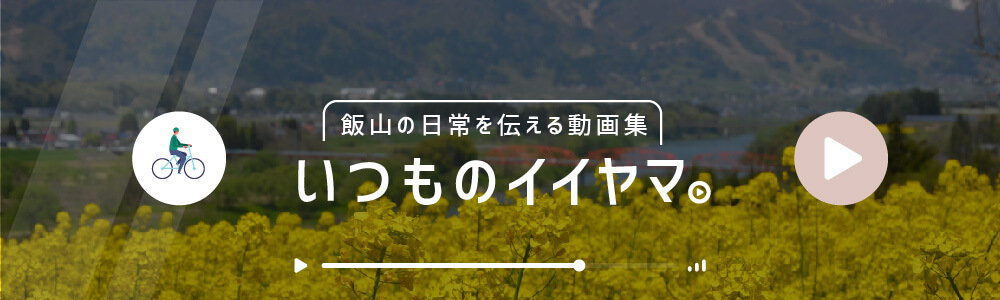
Located alongside the Chikumagawa River (Japan's longest river), the Nanohana Park is said to have been the scenery for which inspired Tatsuyuki Takano's song "Oboro Tsuki Yo" the song for the Ministry of Education.
A fresh spring mist, like clouds floating above the Chikumagawa River, and clusters of vivid yellow blossoms all around, is waiting for you to experience starting from the end of April until mid-May.


Flowing perfectly in the center of Iiyama City is the Chikumagawa River.
It is the longest river in Japan, Shinanogawa River/Chikumagawa River.
When in Niigata Prefecture, it is called the Shinanogawa River.
The gentleness of this river makes it an ideal place to enjoy canoeing or rafting.

Covering 400ha of Mt. Nabekura, precious beech tree stand together to maintain this virgin forest. It is ranked the number one Nature Preserve out of one hundred in Nabekura mountains.
Life appears on the mountain as new leaves color around the village in the foot of Mt. Nabekura (mid-April). Around mid-May, green hues spread to the tops of the mountain.
Fall begins its descent from mid-October and lasting until the beginning of November.


There are two types of buckwheat, one, the "Summer Soba", which is planted in spring and harvested in summer, and the other, "Autumn Soba", which is planted in summer and harvested in autumn.
At the beginning of September, people become fascinated by these white, fairy-like flowers, scattered around the city.
There are lots of shops and restaurants throughout the city where you can savor the flavor of these locally grown, handmade buckwheat noodles or bring them home for everyone to enjoy.
Onsen


Japanese only (The other window opens)
Madarao Kogen Onsen

Japanese only (The other window opens)

Akatsuki Bath & Nozomi Bath
Just located a minutes walk from Togari Ski Park, it is a very popular onsen.
Japanese only (The other window opens)

Japanese only (The other window opens)